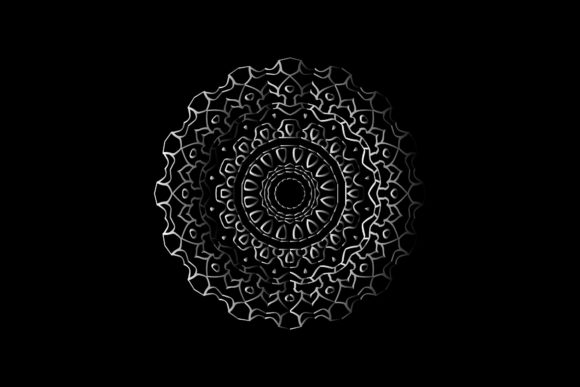
Choosing and Using Floral Mandala Asian Bohemian Designs Without Settling for the Wrong File
Floral Mandala Asian Bohemian artwork blends ornate botanical patterns, symmetrical mandala structures, and the free‑spirited warmth of bohemian style with subtle Asian decorative influences. The result is a visual language that feels both intricate and relaxed, making it a popular choice for everything from handmade stationery to global‑inspired brand identities. People often seek out Floral Mandala Asian Bohemian files as vector design graphics because they want the freedom to resize, recolor, and layer these motifs across wildly different projects — logos, illustrations, animations, t‑shirt designs, social media templates, and more — without ever seeing a jagged edge. Downloads that bundle AI, EPS, PNG, JPG, and SVG formats promise exactly that flexibility. But having the files isn’t the same as using them wisely, and many talented creators hit avoidable roadblocks simply because they overlook a few practical details before clicking “place” or hitting print.
What Makes This Design Genre Stand Out — and Where Misunderstandings Begin
At first glance, the term Floral Mandala Asian Bohemian can sound like a decorative soup. The harmony actually comes from how these elements interact: mandala geometry anchors the composition with repeated symmetry, bohemian flair introduces organic, mixed‑scale floral bursts, and Asian‑inspired linework or vessel‑shaped silhouettes often appears in the detailing. The artwork is equally at home on a boho‑chic festival poster, a yoga studio’s signage, or wrapped around a ceramic mug as on a contemporary logo. Because the visual weight is so adaptable, people assume any single file format they receive will work everywhere. That’s the first quiet trap. A PNG preview with a white background might look crisp on a light‑colored website, but it will disappoint you the moment you need to place that same graphic on a dark t‑shirt or a transparent sticker. The resolution that looks flawless on Instagram can turn pixelated on a three‑foot sign. The misunderstanding isn’t about the artwork — it’s about confusing a quick‑preview asset with a production‑ready file.
Ignoring the Real Difference Between Vector and Raster Can Cost You Time and Quality
When you download a Floral Mandala Asian Bohemian Vector Design Graphic that includes AI 10, EPS 10, and SVG files alongside PNG and JPG versions, you’ve been given both vector and raster worlds. The vector formats — AI, EPS, and SVG — use mathematical paths, which means you can scale the mandala to the size of a billboard or shrink it to a fingernail without losing any sharpness. The PNG and JPG are raster images built from pixels, permanently locked to their original resolution. One of the most frequent mistakes people make is opening a vector file in a photo editor as if it were a flattened photograph, rasterizing it immediately, and then struggling to enlarge it later. The design didn’t fail — the workflow did.
This mistake often looks like: a small business owner needs a storefront window decal and opens the EPS in an image viewer, exports it as a 300‑DPI JPG at a few inches across, and sends that to the sign shop. The sign shop, needing a much larger size, can only upsample a pixelated mess. The result is a dull, soft‑edged graphic that undermines an otherwise thoughtful brand. A better approach is to hand the vector file directly to the printer, or if you must work in a raster environment yourself, import the SVG or AI into your document at the exact output dimensions and at the appropriate resolution for the medium — typically 150–300 PPI for print, depending on viewing distance.
Not Checking How Layers, Lines, and Colors Are Built Before Editing
A beautifully composed Floral Mandala Asian Bohemian piece often contains hundreds of interlocking paths, grouped layers, and compound shapes. If you assume you can instantly change a background color, remove a petal, or simplify the motif without peeking inside the structure, you may end up with weird gaps, uneven strokes, or shapes that refuse to ungroup. People sometimes blame the file, saying it’s “broken,” when the real issue is that the artwork was built with a specific stacking order that needs to be respected — or intentionally released — before editing begins.
Before making any heavy edits, take a few minutes to open the AI or SVG in a true vector application (such as Adobe Illustrator, CorelDRAW, Affinity Designer, or Inkscape) and explore the layers panel and the grouping hierarchy. Look for live effects, clipping masks, or strokes that may need to be expanded into outlines to maintain thickness when scaling. If the design uses Asian brush‑inspired stroke weights, those can become wildly inconsistent if scaled before outlining. A practical habit: duplicate the file or artboard first, work on the copy, and test your edits at a couple of different sizes. This protects the original while letting you learn how the artwork was assembled.
Forgetting That “Print‑Ready” Means More Than a High‑Resolution JPG
Many people confuse a large JPG with a print‑ready file. While JPGs can be useful for quick digital mockups or proofs, they come with baked‑in backgrounds, lossy compression, and restricted color profiles. For any physical product — even a simple t‑shirt heat transfer — you want a transparent PNG or, ideally, the editable vector source. When someone says “my printed t‑shirt has a white box around the mandala,” the culprit is almost always a JPG or a flattened PNG placed directly into a print layout without removing the background. A transparent PNG at 300 DPI placed into a design software and saved as a press‑ready PDF can work, but it still lacks the effortless scalability of a vector file. For screen printing, most apparel decorators will ask for an AI, EPS, or high‑contrast SVG so they can separate colors cleanly. Handing them the right format from the start avoids art fees, delays, and a muddy final print.
Underestimating the SVG for Web and Interactive Projects
Many small business owners and bloggers grab the PNG for a website header and stop there, never realizing the SVG sitting in the same download folder was made for exactly that purpose. An SVG file of a Floral Mandala Asian Bohemian pattern loads crisp on any screen density, typically weighs far less than a high‑resolution PNG, and can even be animated or recolored with CSS. People sometimes avoid SVG because they find it intimidating, but most website builders, from WordPress to Squarespace, now accept SVG uploads directly. You don’t need to code to benefit from it. A simple check: if your mandala design is primarily made of flat colors and clean lines, use the SVG for digital banners, email signatures, and social media graphics. You’ll avoid the softness that happens when a browser tries to scale a small PNG on a retina display.
However, a small but important caveat: always sanitize SVG files from third‑party sources before uploading to a website. A reputable design download will provide clean SVGs, but it’s good practice to open them in a vector editor, remove any stray hidden points, and export a streamlined version. This keeps page performance snappy and avoids unexpected rendering issues in different browsers.
Overlooking the Palette and Adaptability When Mixing With Your Brand
An ornate Floral Mandala Asian Bohemian graphic typically arrives with a specific earthy or jewel‑toned color palette that feels wonderful at first sight. The mistake is treating those colors as permanent. Because vectors exist as individual paths, you can recolor every petal, leaf, and circular ring to match your brand’s exact PMS values or digital hex codes. People sometimes settle for the default colors, place the design next to a mismatched logo, and wonder why the visual identity feels disjointed. The fix is simpler than it seems: open the AI or EPS, use the global color swatches if they exist, or select similar fill values and swap them in a few clicks. Even the PNG can be manipulated with hue/saturation layers in Photoshop for a quick recoloring, though the vector route remains infinitely cleaner.
This adaptability is especially important for t‑shirt designs where ink colors matter. A design that uses twelve colors might be beautiful on paper but expensive or impossible to screen print in small runs. Before committing to a product, open the file and count the number of unique solid colors. If you need a lower color count, use a vector program to map similar tones to a single swatch. Your final graphic will remain intricate but become far more production‑friendly.
What to Check Before You Download, Purchase, or Start Using the Design
A few practical checks will spare you from realizing too late that a file isn’t going to work for your intended use. First, confirm that the Floral Mandala Asian Bohemian Vector Design Graphic download actually includes the advertised formats — AI 10, EPS 10, PNG, JPG, and SVG. Some marketplaces list multiple formats only in the description without delivering all of them; read recent reviews or product comments to be sure. Second, open the AI or EPS in a vector application on your computer, not just the PNG, to verify that the artwork is truly vector and not an embedded raster image saved with a vector wrapper. A quick zoom‑to‑800‑percent test reveals all: crisp lines are genuine vectors, stair‑stepped edges are pixels.
Third, check the license. Many people use the design for a logo without realizing the standard license may require an extended version for trademark use. This isn’t about fear; it’s about protecting your brand down the line. Fourth, if you plan to animate the mandala (a popular choice for meditation apps and motion graphics), test how easily the SVG or AI layers can be split into animation‑ready assets. Over‑flattened designs may need extensive path work before they can be rigged in After Effects or similar software.
Working Smarter Across Different Creative Projects
Once you understand the strength of each file type, the way you use the design across different platforms becomes much more confident. For a professional logo, start with the AI or EPS to build a refined lockup, then export to SVG for your website and PNG for social profiles. For illustrations, bring the SVG into Procreate or Adobe Fresco via a vector‑friendly route and treat the mandala as a living outline you can hand‑embellish. For animations, separate the individual floral elements and rotate them slightly at different speeds to create a hypnotic, never‑ending motion loop that feels both Asian‑inspired and deeply bohemian. For apparel, supply your printer with the AI file saved in a compatible version (often Illustrator CS6 or CC with outlined text and strokes expanded). Many shirt designers find that keeping a copy as an EPS with preview makes collaborations with different vendors seamless.
People sometimes hesitate to use such ornate designs on smaller items like business cards or phone cases, worrying the detail will become a muddy blob. The opposite is true when you work from vectors: the precision stays intact. A delicate floral mandala scaled to fit a 3 mm‑wide border on a sticker remains razor‑sharp because the math doesn’t degrade. Trust the vector, and test a printed proof on the actual material before running a full batch — different substrates absorb ink differently, and a test proof is the ultimate safeguard.
Improving Your Workflow Instead of Fighting the File
The most satisfied creators are the ones who treat a Floral Mandala Asian Bohemian Vector Design Graphic as a flexible building block rather than a finished, untouchable masterpiece. Once you’re comfortable exploring the layers and recoloring the artwork, you’ll likely find yourself using the same design across a cohesive product line — a candle label, a matching website icon, an Instagram carousel frame, and a fabric pattern on a tote bag — all speaking the same visual language. The common thread isn’t a single file format but a mindset that asks “what can this path do for me today?” rather than “why doesn’t this look exactly like the preview on my screen?”
A small but meaningful shift: before sending any file to a collaborator, add a brief note about which format you’re including and why. If you share the SVG with a web developer, mention that it’s been optimized. If you send the EPS to a printer, let them know the color mode and whether any elements need overprinting. Clear communication combined with the right file choice prevents the back‑and‑forth that steals time from the creative work itself. With the right checks and a little vector literacy, your Floral Mandala Asian Bohemian design will move smoothly from screen to stencil to storefront, exactly as you envisioned it.