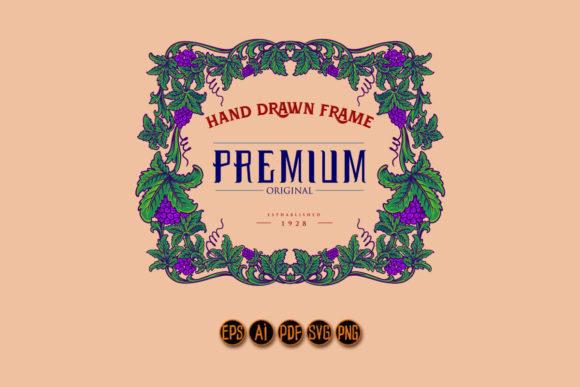
The Art and Practical Magic of Classic Frame Wine Labels with Floral Vector Illustrations
Picture an old vineyard at dusk, the kind where stone walls hold centuries of stories and every bottle pulled from the cellar feels like an event. The label on that bottle isn't just a sticker. It's a frame. A border of curling vines, delicate petals, and symmetrically balanced ornamentation that whispers of tradition before you even read the name of the wine. That is the world of classic frame wine labels with floral and vector illustration—a design niche that blends heritage aesthetics with crisp modern production. This article explores what these design assets are, why they matter, how they are used across dozens of creative and commercial applications, and what makes their file formats and editing capabilities so valuable in today's design workflows.
Understanding the Classic Frame Wine Label Aesthetic
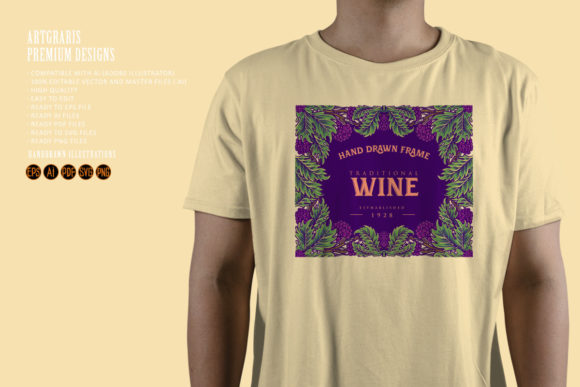
At its heart, a classic frame wine label is a decorative border structure. It often features symmetrical frames—rectangular, oval, or shield-shaped—adorned with floral ornate elements such as roses, grapevines, acanthus leaves, laurel wreaths, and filigree curls. These are not random decorations. They echo the visual language of 18th- and 19th-century European wine châteaux, where a label was a mark of estate prestige, a miniature artwork printed from engraved copper plates. The floral motifs symbolized nature's abundance and the vineyard's connection to the land. The frame itself suggested order, permanence, and authenticity.
Today, that same visual vocabulary has been translated into vector illustration formats. Instead of ink on paper, designers work with mathematically precise paths, anchors, and curves. The result is an art file that can scale from a tiny bottle label to an enormous banner without losing crispness. This is the fundamental appeal: you get the old-world charm without the old-world limitations.
Why Vector? The Technical Foundation That Matters
To appreciate these design collections fully, it helps to understand the vector difference. Raster images—like photographs—are made of pixels. Zoom in far enough, and edges become jagged, soft, unusable for print. Vector graphics, by contrast, are built from mathematical equations that define every line and curve. A floral flourish in a vector file remains razor-sharp whether it's stamped on a wine cork or stretched across a storefront window decal.
When a product description mentions 100 editable vector files, it means every petal, every ornamental swirl, every border segment exists as an independent object that can be reshaped, recolored, or removed without affecting the rest of the design. This is the difference between a rigid template and a genuinely flexible creative toolkit. Designers who use Adobe Illustrator encounter files where layers are intact, groups are logical, and color palettes are globally adjustable. That saves hours of manual tracing or guesswork.
The Product Suite in Focus: What You Actually Receive
Let's get specific about what a comprehensive design pack in this category typically includes. While every seller offers slightly different bundles, the collection type we're examining here comes with features that meet professional production standards:
- 100 editable vector master files in Adobe Illustrator (.AI) format, giving you a library of frame styles, floral ornaments, and combined compositions.
- EPS files (Encapsulated PostScript), a universal vector format compatible with nearly all design software, including CorelDRAW and Affinity Designer.
- SVG files (Scalable Vector Graphics), ideal for web use, cutting machines like Cricut and Silhouette, and direct browser rendering.
- PDF files that preserve vector data and can be opened by anyone, even without dedicated design software, for quick viewing or simple printing.
- High-resolution PNG files at 300 dpi on transparent backgrounds, ready for immediate use in mockups, presentations, or any raster-based software.
- Editable color capability, meaning you can recolor any gold metallic frame to silver, any red rose to lavender, any deep green vine to pastel mint—color is never locked.
- Ready-to-print formatting and compatibility with AI Adobe Illustrator, which is the industry standard for professional design work.
The phrase "ready AI file" signals that the .AI documents are not flattened artwork buried inside an Illustrator file. They are fully constructed with editable paths, transparent backgrounds, and organized layers. This is critically important for anyone who has ever opened a supposedly "editable" file only to find a single embedded image they cannot modify.
Practical Applications Across Industries and Hobbies
One of the most appealing aspects of classic frame wine label illustrations is their versatility. They are marketed for wine labels, and they excel there, but their usefulness spreads far beyond the bottle shop. Below is a breakdown of real-world uses, organized by product category.
1. Merchandise and Apparel
Floral ornate frames translate beautifully onto T-shirts and tote bags. The timeless aesthetic works for vineyard merchandise, bridal party favors, boutique café uniforms, or simply artistic streetwear. Since the vector files maintain crisp edges at any size, you can place a delicate frame design on a left-chest pocket print or blow it up as a full-back graphic without reworking the art. Screen printers, direct-to-garment operators, and heat-transfer vinyl crafters all appreciate receiving artwork in clean vector or transparent PNG format. When a file is 300 dpi on a transparent background, it drops onto any colored shirt without a distracting white box around it.
2. Stickers and Decals
Sticker culture has exploded in recent years—laptops, water bottles, car windows, planner covers. Classic frame designs with floral illustrations give stickers an elevated, almost vintage-apothecary feel. Thanks to SVG compatibility, these files work seamlessly with Cricut and Silhouette cutting machines. A designer can set the machine to cut precisely along the ornate outer contour, producing a kiss-cut sticker with a beautifully intricate edge. The same applies to die-cut vinyl decals for storefront windows or product packaging seals.
3. Event Stationery and Greetings
Wedding invitation suites, rehearsal dinner menus, bridal shower postcards, and thank-you notes often borrow directly from wine label aesthetics. A floral ornate frame around the couple's names instantly communicates formality and romance. But these designs are equally useful for non-wedding events—garden party invitations, milestone birthday greetings, holiday cards, and corporate event flyers all benefit from the classic framing language. Because the files are editable, you can swap deep burgundy and gold for pastel blush and sage green, adapting the same frame to entirely different color moods and seasons.
4. Banners, Flyers, and Posters
When designing promotional materials for wine tastings, farmers' markets, restaurant specials, or gallery openings, a classic frame provides instant structure. It creates a visual container for the message. The brand name sits centered, the event details rest neatly below, and the ornate border draws the eye inward. EPS and PDF files ensure large-format printers can output sharp results at any scale. A banner three feet wide looks just as crisp as a flyer six inches tall. This scalability is a vector superpower that raster formats simply cannot match.
5. Home Décor and Printed Decorations
Framed prints, wall art, decorative tiles, and even sublimated pillows can feature these ornate designs. Imagine a gallery wall where botanical illustrations sit inside matching vine-wrapped frames, or a set of kitchen towels printed with herb labels in classic wine-label style. The ready-to-print nature of the files means a maker can send the artwork directly to a print-on-demand service, a local print shop, or their own desktop printer with confidence that the output will look professional.
Common Misunderstandings About Editable Vector Files
A widespread assumption is that "editable" means "anyone can open and change it with any software." In reality, vector editing requires compatible software, with Adobe Illustrator being the gold standard. The product description that states "Compatible with AI Adobe Illustrator" is providing crucial guidance. The .AI master files open natively in Illustrator with full editability. EPS files can be opened in most vector-capable programs, but some complex effects (like certain gradient meshes or transparency modes) may not translate perfectly across every application. SVG files are the most portable but sometimes lack complex styling. High-resolution PNG files are universally openable but are not editable in a vector sense—they are flat images, albeit with transparent backgrounds. Understanding this hierarchy helps users open the right file for their specific software and purpose.
Another point of confusion involves editable color. In a well-constructed vector file, colors are applied via fills and strokes that can be selected and changed globally. If the artwork uses a global swatch palette, changing one swatch updates every object using that color. This is enormously efficient. However, some less experienced users mistakenly think clicking on a PNG with a paint bucket tool will accomplish the same result—it won't. True color editing happens inside vector software with the original .AI, .EPS, or .SVG file.
Why Resolution Still Matters
You might wonder: if vectors are infinitely scalable, why does the product include 300 dpi PNG files? The answer is that many design workflows, online platforms, and printing services still operate best with raster files at a specific resolution. Print-on-demand marketplaces like Amazon Merch, Redbubble, or Etsy-integrated platforms often require 300 dpi PNG uploads rather than vector formats. The transparent background ensures the design sits cleanly on any substrate color. So while the vector files are the source of truth and the most powerful assets in the collection, the pre-rendered PNGs eliminate steps for the end user, making the pack genuinely ready to print out of the gate.
The Creative and Commercial Significance
From a business perspective, design assets like classic frame wine labels lower the barrier between idea and product. A small-batch winemaker without a design budget can purchase the pack, open the .AI file, type in their vineyard name, and send the result to a label printer—all in an afternoon. A stationery designer can use the same floral frames across an entire wedding suite, creating cohesive branding that would have taken days to illustrate from scratch. A T-shirt entrepreneur testing a new product line can mock up ten designs in a few hours, experimenting with different colorways and placements, and order samples by the end of the week. The speed advantage is real, and it doesn't require sacrificing quality or originality, because the editable nature of vector art means every user can produce a unique outcome even from shared starting assets.
There is also a deeper cultural throughline. Wine label design is a quiet art form with enormous influence. The frame-and-floral tradition connects modern products to a visual heritage of craft, patience, and authenticity. When a consumer picks up a bottle with a beautifully framed label, there is often an unconscious assumption that the care visible on the outside reflects care on the inside. Whether or not that assumption holds true, the design language certainly shapes perception. The same psychological effect ripples through other applications: a tote bag with an ornate floral frame feels more premium, a greeting card with a classic border reads as more considered, a café flyer with a wine-label layout seems more curated.
Making the Most of Your Purchase
Once the files are in your hands, a few practical steps help you extract maximum value. Start by opening the master .AI file in Adobe Illustrator if available. Explore the layers panel—reputable design packs organize frames, floral elements, and backgrounds into clearly named groups. Try selecting a floral element and changing its fill color to see how easily the palette shifts. Experiment with removing or duplicating ornaments to create asymmetrical variations from symmetrical originals. For those working on a tight deadline for flyers, banners, or stickers, the EPS files often import cleanly into programs like CorelDRAW, and the SVG files are the go-to for cutting-machine software. The PDF files serve double duty as quick proofs you can email to clients for approval without exporting anything manually.
The 100 editable vector and master files represent a substantial creative library. Not every frame or floral cluster will suit every project, but having options means you can match the ornamental density to the message. A heavily ornate, Baroque-inspired frame might suit a bold red blend or a dramatic event poster. A lighter, more delicate floral border might work better for a rosé label, a bridal shower invitation, or a minimalist greeting card. The flexibility to choose is what turns a product from a simple download into a long-term creative resource.
A Genuine Asset for Designers and Non-Designers Alike
Experienced designers often maintain libraries of such vector assets because they accelerate client work without compromising the final piece. But these collections are also accessible to motivated non-designers. If you run a small business, manage a church fundraising event, teach art classes, or coordinate a family reunion, you may not have formal design training. Yet with a willingness to learn the basics of a program like Illustrator or a free vector-capable alternative like Inkscape, you can open these files, substitute your own text and colors, and generate print-ready output that looks polished far beyond your personal skill level. That democratizing effect is part of why vector asset packs have grown so popular in creative marketplaces.
The thank you for your purchase, do not forget to rate note often appended to these product listings serves as a gentle reminder that independent designers rely on community feedback. Ratings and reviews not only guide future buyers but also support the creators who invest time in building well-organized, properly formatted, genuinely useful design assets. Good reviews help the best resources rise to the top.
Final Thoughts on Timeless Design in a Digital Age
Classic frame wine labels with floral and vector illustration represent a fascinating intersection. They carry the visual weight of centuries-old printing traditions into the modern era of scalable graphics and instant digital delivery. The frames, vines, petals, and ornamental curls that once required a master engraver's steady hand are now available as layers in a software workspace, ready to be recolored with a few clicks. Yet the emotional response they evoke remains the same: a sense of occasion, a nod to craftsmanship, an invitation to look closer. Whether printed on a bottle, stitched onto a tote, posted as an event flyer, or enclosed as a greeting card, these designs quietly elevate the ordinary into something memorable. With the right files—AI, EPS, SVG, PDF, and 300-dpi PNG on transparent backgrounds—and a bit of creative curiosity, the distance between an idea and a finished product has never been shorter.