The Creative Designer's Guide to Floral Ribbon Banner Hand Drawn Elements
In the world of graphic design, the smallest details often carry the greatest weight. A delicate swirl, a carefully placed leaf, or an elegantly curved ribbon can transform an ordinary project into something that feels personal, warm, and unmistakably human. Floral ribbon banner hand drawn elements represent one of the most versatile and emotionally resonant tools in a designer's visual vocabulary. These illustrated ornaments combine the structural elegance of traditional banners with the organic charm of botanical illustration, all rendered with the precious imperfections of hand drawing. Whether you are designing wedding invitations, branding materials, social media graphics, or product packaging, understanding how to harness these elements can dramatically elevate your creative work.
This comprehensive guide will walk you through everything you need to know about floral ribbon banner hand drawn elements. We will explore what makes them unique, why the hand drawn quality matters so much in an increasingly digital world, how to use them effectively across different projects, and what to look for when sourcing high-quality design assets. By the end, you will have a deeper appreciation for these decorative elements and a clearer sense of how to integrate them into your own creative workflow.
What Are Floral Ribbon Banner Hand Drawn Elements?
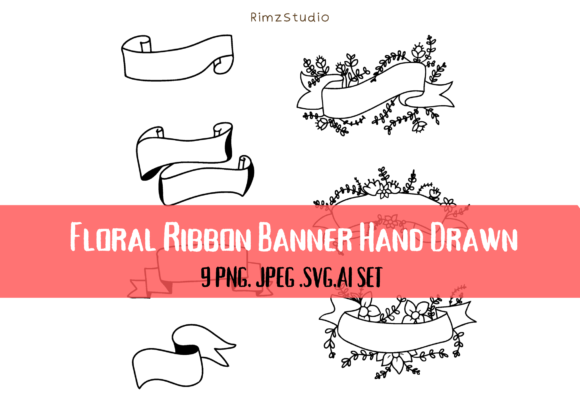
At their core, floral ribbon banner hand drawn elements are decorative graphic components that merge two classic design motifs: the flowing ribbon banner and the blooming floral arrangement. A ribbon banner typically provides a space for text—curved, folded, or waving gracefully across the composition—while floral elements weave around, behind, and through the banner, adding texture, color, and organic movement. What sets these particular assets apart is the hand drawn quality. Unlike mechanically perfect vector shapes, hand drawn elements carry subtle irregularities in line weight, curve, and spacing that mimic the feel of pen, pencil, or brush on paper.
These elements are usually provided as digital files in formats such as PNG, JPEG, SVG, and AI (Adobe Illustrator). The best collections offer individual components separated into layers, giving designers the freedom to rearrange, recolor, and resize each piece without losing quality. A typical set might include multiple banner variations, accompanying floral sprays, leaves, and sometimes bonus text elements like "Welcome," "Thank You," or "Be Mine" already integrated into the floral ribbon design.
The Anatomy of a Floral Ribbon Banner
To fully appreciate these design assets, it helps to understand their typical structure. Most floral ribbon banners consist of three primary visual components working in harmony.
The ribbon element is the backbone of the design. It may curve in a gentle arc, fold back on itself in a classic banner shape, or stretch horizontally with tapered ends. The ribbon creates a natural focal point and often serves as a container for typography. The floral clusters are arranged asymmetrically or symmetrically along the ribbon, drawing the eye along the composition and softening the geometric structure of the banner. Finally, the accent foliage—small leaves, buds, and vine-like tendrils—fills out the design and creates a sense of lushness and depth.
When these three components come together with a hand drawn aesthetic, the result is a design element that feels both structured and spontaneous. This balance is precisely what makes floral ribbon banners so appealing across such a wide range of creative applications.
Why the Hand Drawn Quality Matters
We live in an era of digital precision. Algorithms can generate flawless geometric patterns in milliseconds, and vector tools allow designers to create mathematically perfect curves with a few clicks. So why, in this landscape of perfect pixels, do hand drawn elements command such enduring popularity? The answer lies in human psychology and the emotional resonance of imperfection.
Hand drawn illustrations carry what art theorists call the warmth of the human touch. The slight wobble in a line, the variation in stroke thickness, the organic asymmetry of a freehand petal—these qualities signal to our brains that a real person made this thing. In a marketplace saturated with cookie-cutter digital graphics, that human quality stands out. It builds trust, conveys authenticity, and creates an emotional connection with the viewer. For brands, this can translate into deeper customer engagement and stronger brand loyalty. For individual creators, it adds a signature quality that distinguishes their work from templated designs.
Moreover, hand drawn floral elements tap into the broader cultural appreciation for craftsmanship and artisanal values. Just as consumers gravitate toward handcrafted goods in physical products, audiences respond positively to digital designs that show evidence of human artistry. This makes floral ribbon banner hand drawn elements particularly valuable for businesses and creators who want to position themselves as authentic, thoughtful, and creatively invested in their visual identity.
Practical Applications Across Industries
The versatility of floral ribbon banners makes them relevant to an astonishingly broad spectrum of projects. Understanding where and how to deploy these elements can help you make more informed creative decisions and maximize the impact of your design assets.
Wedding and Event Stationery
Perhaps the most natural home for floral ribbon banners is in wedding and event design. Save-the-date cards, formal invitations, RSVP cards, menus, place cards, and thank-you notes all benefit from the elegant framing and text accommodation that ribbon banners provide. The floral elements can be matched to the wedding's botanical theme or seasonal color palette, creating a cohesive visual narrative across all printed materials. Designers often appreciate files with transparent backgrounds (such as PNGs) for layering over photographic backgrounds or textured paper stocks.
Branding and Visual Identity
Small businesses, particularly those in the lifestyle, wellness, beauty, and hospitality sectors, can leverage floral ribbon banners in their logos, tagline treatments, and packaging design. A café might use a delicate floral ribbon to frame its name on a storefront sign. An organic skincare brand could incorporate these elements into product labels to emphasize natural ingredients and artisanal production methods. Because high-quality sets include vector files like SVG and AI formats, designers can scale these elements infinitely without losing clarity—a critical requirement for branding applications that span from business cards to billboards.
Social Media and Digital Content
In the fast-paced world of social media, visual content must grab attention quickly while communicating brand personality. Floral ribbon banners offer a quick way to add polish and charm to quote graphics, announcement posts, promotional banners, and story templates. The hand drawn quality helps digital content feel less manufactured and more personal, which can boost engagement rates. With individual elements separated into layers, creators can easily animate different components or adapt the color scheme to match campaign-specific palettes.
Print-on-Demand and Merchandise
The resolution and color specifications of design assets matter enormously for print applications. High-quality floral ribbon banner sets typically provide files at 300 dpi (dots per inch) in CMYK color mode, which is the standard for professional printing. This ensures that designs will reproduce crisply and with accurate colors on t-shirts, tote bags, mugs, stationery, and home décor items. The transparent background PNGs are especially useful for placing designs on products without visible bounding boxes or white edges.
Understanding File Formats and Technical Specifications
One of the most common sources of confusion among designers—especially those newer to the field—involves file formats. When you download a set of floral ribbon banner hand drawn elements, you typically receive multiple file types in a compressed ZIP archive. Each format serves a distinct purpose, and knowing when to use each one can save hours of frustration.
Raster vs. Vector: A Functional Distinction
Raster files (such as PNG and JPEG) are made of pixels. They have a fixed resolution and will become blurry or jagged if enlarged beyond their native dimensions. PNG files with transparent backgrounds are ideal for digital collage, web graphics, and projects where you need the element to blend seamlessly over other visuals. JPEG files are compressed and support backgrounds only, making them suitable for final flattened designs but less useful for compositing.
Vector files (such as SVG and AI) are built from mathematical paths rather than pixels. This means they can be scaled to any size—from a tiny icon to a massive billboard—without losing sharpness. SVG files are widely compatible and can be opened in most vector editing software, while AI files are native to Adobe Illustrator and preserve full layer structures and editability. For professional graphic design work, having access to vector source files is invaluable. They allow you to recolor elements with precision, modify individual anchor points, and extract specific components for custom compositions.
Color Mode and Resolution
Design assets intended for print should be in CMYK color mode, which represents the four ink colors used in commercial printing: cyan, magenta, yellow, and key (black). Digital displays use RGB color mode, so colors may shift when converting between the two. Knowing that your floral elements are delivered in CMYK gives you confidence that what you see during design will closely match the printed result. Combined with a resolution of 300 dpi, these specifications meet professional print standards and eliminate guesswork.
Common Misunderstandings About Design Asset Packages
When purchasing or downloading design element sets, several misunderstandings can lead to disappointment or misuse. Clarifying these points upfront helps set realistic expectations and ensures you get the most value from your assets.
One frequent point of confusion involves mockup files. Many design asset listings specify that mockup files—images showing the elements in context, such as on a framed print or product—are not included. This is standard practice. The mockup images serve as presentation examples to demonstrate the elements' potential. What you receive are the isolated graphic files themselves, ready to be placed into your own mockups or real-world designs. Another assumption involves bundled files. While a set might contain nine individual floral ribbon banners, it may also include JPEG files that group all elements together for quick reference. These composite files are helpful for previewing the collection but do not replace the individual, editable components.
There is also occasional confusion about the Bonus elements that accompany many floral ribbon banner sets. These might include pre-designed banners with words like "Welcome," "Thank You," or "Be Mine" already integrated into the ribbon. These bonuses are fully editable in vector formats but serve as convenient starting points for projects where you need a quick, ready-made solution. They do not limit your creative flexibility; rather, they expand the range of immediate-use options available to you.
Design Tips for Working with Floral Ribbon Banners
To make the most of your floral ribbon banner elements, consider these practical design strategies. Each one leverages the unique qualities of hand drawn assets to create stronger, more compelling compositions.
Embrace Asymmetry
Perfect symmetry can sometimes feel stiff, especially when paired with hand drawn elements that carry organic irregularity. Try positioning your floral clusters off-center relative to the ribbon, or use an uneven distribution of botanical elements on either side. This creates visual tension and guides the eye through the composition in a more dynamic way. The natural, freeform quality of hand drawn flowers and leaves often looks most authentic when arranged with a touch of controlled imbalance.
Layer for Depth
Because high-quality sets provide elements separated into layers, you have the freedom to build depth in your compositions. Place some floral elements behind the ribbon and others in front, creating an overlapping effect that mimics the dimensionality of real botanical arrangements. Use subtle drop shadows or slight transparency variations to enhance this layered look without overwhelming the delicate linework.
Respect the Line Quality
The charm of hand drawn elements lies partly in their line quality. When scaling vector versions, be mindful not to distort the proportions that give the lines their character. Overly thick outlines can make a delicate floral spray feel clumsy, while overly thin strokes may disappear at small sizes. Test your compositions at the intended output size to ensure the hand drawn quality remains visible and appealing.
Coordinate with Typography
The ribbon portion of these elements is designed to hold or accompany text. Choose typefaces that complement the hand drawn aesthetic. Script fonts with natural stroke variation pair beautifully, as do clean sans-serifs that create a pleasing contrast with the organic illustrations. Avoid overly rigid or mechanical typefaces that might clash with the warmth of the hand drawn artwork.
Why Source Files and Layer Separation Matter
One of the most valuable features of a well-organized design asset package is the inclusion of source files and layer-separated elements. These technical attributes dramatically expand your creative possibilities. When every flower, leaf, banner fold, and decorative accent sits on its own layer, you can independently adjust, recolor, reposition, or remove any component without affecting the rest of the design. This modular flexibility means that a set of nine floral ribbon banners can be reconfigured into dozens of unique combinations, effectively multiplying the value of your investment.
Source files in AI format preserve this layer structure and often include editable text elements as well. For designers who need to customize a "Thank You" banner into a "Merci" banner, or adapt a "Be Mine" design for a different romantic sentiment, having access to the original Adobe Illustrator file makes these modifications straightforward. You can match fonts, adjust letter spacing, and maintain the integrated look that makes these elements so effective.
The Enduring Appeal of Botanical Ornament in Design
Floral motifs have adorned human creations for millennia, from ancient manuscript illuminations to Victorian wallpaper patterns to modern minimalist logos. The enduring popularity of botanical ornament speaks to something fundamental in our relationship with the natural world. Flowers represent growth, beauty, transience, and celebration—all themes that resonate deeply in human experience. When combined with the structural clarity of a ribbon banner, these floral elements bridge the gap between wild nature and ordered communication.
In today's digital landscape, where so much visual content feels transient and mass-produced, floral ribbon banner hand drawn elements offer a meaningful alternative. They bring the warmth of handcraft into pixels and vectors. They remind viewers that behind every screen there is a human being with taste, intention, and the capacity for beauty. For designers, illustrators, small business owners, and content creators, these elements are not merely decorative add-ons. They are tools for building more authentic, emotionally resonant visual communication. Whether you are crafting a wedding invitation that will be treasured for decades or designing a social media post that will live for hours, the hand drawn quality of these floral ribbons adds a layer of care that audiences can feel.
As you integrate these elements into your own projects, remember that the best designs do not just look good—they communicate something true about the people and ideas behind them. With thoughtful application and an understanding of the technical and aesthetic principles we have explored, floral ribbon banner hand drawn elements can become a signature part of your creative toolkit, helping you make work that is more decorative, more attractive, and more genuinely human.