Getting the Most from a Floral Egg Digital Design Bundle in Your Creative Projects
When you purchase a Floral Egg design set, you receive more than a decorative image. You gain access to a multi-format resource that can move through different software environments, production pipelines, and final outputs without losing fidelity or forcing you into a single way of working. The bundle delivers SVG, DXF, EPS, JPEG, PNG, and PDF versions of the same floral egg motif, each with distinct strengths depending on where and how you plan to use the artwork.
Understanding what each format does well, how the files relate to one another, and where they fit into a broader creative or business process saves time and prevents the kind of rework that happens when you realize a file type cannot handle a specific task. The goal here is to treat the Floral Egg bundle as a flexible asset you can deploy across multiple touchpoints rather than as a static image you use once and forget.
What the Floral Egg Bundle Actually Contains
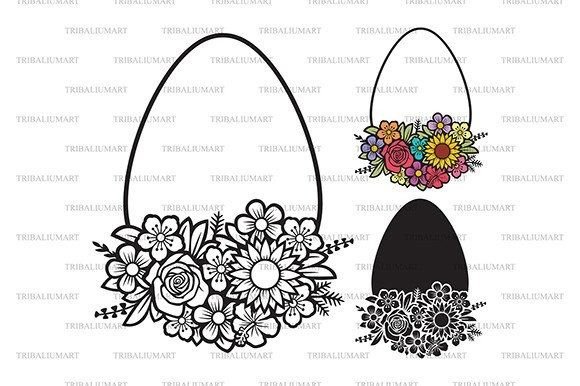
A Floral Egg design centers on an egg shape filled or outlined with botanical elements—flowers, leaves, vines, or blossom clusters arranged to form or decorate the egg profile. The aesthetic leans toward spring themes, garden-inspired branding, seasonal product lines, and decorative craft work. When you complete your purchase, you receive a single ZIP folder that expands into the six file formats, with each individual image provided in every format.
This structure matters because it eliminates the need to trace, redraw, or manually convert the artwork before moving it into different software. The work of preparing the design for multiple environments has been done for you. The ZIP folder format also keeps the files organized in one compressed container, which means you can store and transfer the entire set without worrying about missing pieces.
Understanding Each File Format's Role in Your Workflow
The six formats in the Floral Egg bundle are not just redundant copies of the same image. They serve different technical functions, and knowing when to use which one keeps your process efficient.
SVG files are the primary editable vector format. They work natively in design software like Adobe Illustrator, Affinity Designer, Inkscape, and Cricut Design Space. Because SVGs store the image as mathematical paths rather than pixels, you can scale the floral egg to any size without quality loss. This makes the SVG the file you reach for when you need to recolor elements, separate layers, resize for large-format printing, or prepare the design for cutting machines.
DXF files serve a similar vector purpose but are optimized for CAD software and certain cutting machine programs that prefer the Drawing Exchange Format. If you work with laser engravers, CNC routers, or older versions of cutting software that handle DXF more reliably than SVG, this format removes the friction of file conversion.
EPS files are the universal vector exchange format. They open in nearly every professional design application and are often required by print shops for large-format work. When you send the floral egg artwork to a commercial printer for banners, signage, or merchandise, the EPS file ensures compatibility with their prepress systems.
PNG files give you the design with a transparent background at a high resolution. This format is ideal for digital use—overlaying the floral egg onto product mockups, website headers, social media graphics, or digital scrapbook pages. The transparency means you can place the egg design onto any colored background without a white box around it.
JPEG files provide a standard flattened image with a white or filled background, useful for quick previews, sharing with clients, inserting into documents, or uploading to platforms that do not support PNG transparency. The compression keeps file sizes manageable.
PDF files round out the bundle as a print-ready document format. You can open and print the floral egg design directly from a PDF reader without needing design software. This format is also useful for creating printable sheets, coloring pages, or reference documents to include in client packages.
Preparing Your Workspace Before You Start
Before you begin using the Floral Egg files, take a few minutes to organize your assets in a way that supports your specific workflow. After downloading the ZIP folder, extract the contents to a project folder with a clear naming convention. Consider renaming the base folder to include the date and project name so you can find it later without searching through generic download directories.
Open each file type once to confirm that your software reads it correctly. While the files are designed to be compatible across platforms, slight version differences between programs can occasionally affect how layers, colors, or paths appear. Checking this upfront prevents surprises when you are under a deadline.
If you plan to use the floral egg across multiple projects or with different color schemes, create a master folder that holds the original unedited files. Make copies into project-specific folders before modifying anything. This preserves the source files as a clean reference point you can return to months later when you need the design for something new.
Integrating the Floral Egg into Creative Projects
The floral egg motif fits naturally into seasonal product lines, but its usefulness extends beyond spring and Easter themes. The botanical egg silhouette works as a logo element for organic or natural product brands, a decorative border for stationery and invitation suites, an embroidery pattern when converted through digitizing software, or a repeating element in fabric and wrapping paper designs.
For small business owners who create physical products, the SVG and DXF formats connect directly to cutting machines for vinyl decals, heat transfer vinyl for apparel, stencil creation, and paper crafting. The vector paths in these files tell the cutting machine exactly where to trace, score, or cut. Before sending the file to your machine, check that the design layers are properly separated, grouped, and assigned to the correct cut actions. Some cutting software requires you to ungroup elements or change line colors to indicate different operations.
For digital creators and content marketers, the PNG files slot into blog graphics, newsletter headers, Pinterest pins, and social media templates. The transparent background means you can layer the floral egg over photography, textured backgrounds, or brand-color blocks without extra editing. If you batch-create content, import the PNG into a template once and reuse it across multiple pieces to maintain visual consistency.
Working with Physical Production and Print
When your project moves from screen to physical output, the format you choose directly affects the result. For print-on-demand products such as mugs, tote bags, or phone cases, the EPS or high-resolution PNG typically meets platform requirements. Always verify the specific file specifications of the print provider you are using. Some require CMYK color profiles, minimum resolution thresholds, or specific file types for best results.
For laser engraving, the DXF or SVG file provides the clean vector paths that engraving software translates into tool movements. Test on scrap material first, especially when working with wood, acrylic, or leather, to dial in the power and speed settings that produce clean engraved lines without burning or warping the material around the floral details.
For sublimation printing, you will likely use the PNG or JPEG at high resolution. Ensure your image dimensions match the print area at 300 DPI to avoid pixelation when the design transfers onto the substrate. The floral egg's organic shapes tend to be more forgiving than geometric patterns when slight alignment shifts occur during pressing, which makes the design a practical choice if you are newer to sublimation workflows.
Combining the Floral Egg with Other Design Assets
The floral egg rarely stands completely alone in a final project. You may pair it with typography for a greeting card, additional botanical illustrations for a pattern, or photographic elements for a composite design. Because the bundle provides the design in both vector and raster formats, you can choose how to combine it with other assets based on the software you are using.
In a vector environment like Illustrator, bring in the SVG or EPS version of the floral egg and place it alongside other vector elements. You can adjust colors globally, apply consistent stroke weights, and align elements precisely. In a raster environment like Photoshop, use the PNG to composite the egg with photographic backgrounds, apply texture effects, or integrate it into digital collage work.
If you are creating a branded asset library, keep the floral egg files alongside your brand fonts, color palettes, and other recurring design elements. When you need to produce seasonal content quickly, the entire kit sits ready without requiring you to search through past purchases or recreate elements from scratch.
Maintaining Quality Control Across Different Outputs
One of the underappreciated aspects of using a multi-format bundle is the ability to maintain consistent quality regardless of where the design appears. A floral egg that looks crisp on a website header but pixelated on a printed flyer undermines the professional impression you are trying to build.
Test your outputs at actual size before committing to a full production run. Print a sample of the PDF or EPS at the intended dimensions. Check that fine botanical lines do not disappear or fill in at smaller sizes. View the PNG on different screen resolutions to confirm the transparent edges remain clean against contrasting backgrounds. Small adjustments made during this testing phase can save the cost of reprinting or re-exporting later.
When scaling the vector versions up significantly—for banners, wall art, or large signage—zoom in to inspect how the curved paths behave at the new size. Vector paths maintain mathematical precision, but extremely fine details in the floral elements may become visually disproportionate when enlarged beyond typical dimensions. Thickening thin strokes or simplifying overly complex petal shapes at large scales keeps the design looking intentional rather than fragile.
Long-Term Organization and Reuse Strategies
The Floral Egg bundle holds ongoing value beyond a single project. Because the design is seasonal yet stylistically versatile, you may return to it annually or repurpose it for different product categories over time. To support long-term reuse, store the original ZIP folder in a cloud backup location as well as on a local drive. Cloud storage protects against hardware failure, while local storage ensures you can access large vector files quickly when working.
Create a simple index document or spreadsheet that notes which projects used the floral egg, which formats were employed, and any modifications made. This practice feels like overhead in the moment, but it pays off when a client reorders a product from two years ago or asks for a variation on a previous design. Rather than reverse-engineering your old work, you can reference your notes and pull the exact file version you need.
If you create derivative works—recolored versions, pattern tiles, or edited compositions—save those as new files with descriptive names rather than overwriting the originals. The original floral egg artwork remains available as a neutral starting point for future iterations that may require different color treatments or stylistic adaptations.
Practical Considerations for Different User Types
Crafters and hobbyists often use the SVG and DXF formats with cutting machines to produce cards, decals, stencils, and heat-transfer designs. The immediate priority is usually getting the file into the cutting software, sizing it correctly, and sending it to the machine. Taking an extra moment to group or ungroup elements as needed and to assign cut lines properly before running the job prevents wasted material.
Graphic designers and marketers more frequently work with the EPS, PNG, and PDF formats. They combine the floral egg with brand assets, adjust compositions for different layout requirements, and export final deliverables for clients or campaigns. The transparent PNG becomes particularly valuable for rapid prototyping of design concepts where the egg motif needs to sit on various backgrounds without additional masking work.
Small business owners and product creators often operate across both physical and digital domains—selling printable art in online marketplaces while also producing physical merchandise. The PDF and JPEG formats support the printable side, while SVG and DXF support physical production. Having all formats in one bundle means you do not need to source separate assets for each product type, which keeps your product line visually cohesive.
Making the Purchase Decision with Clear Expectations
These are digital files delivered through instant download. No physical product ships to your address, which means you can access the artwork immediately after purchase and start working without waiting for delivery. This also means you need the appropriate software to open and use the files before you buy. The SVG requires vector editing or cutting software, the DXF requires compatible CAD or cutting programs, EPS requires professional design tools, and so on.
Confirming your software setup ahead of time ensures the download delivers immediate utility rather than sitting on your hard drive while you figure out how to open the files. Most users who work regularly with digital design assets will have at least one compatible program in their toolkit. If you are newer to digital crafting or design, check your software's supported file formats against the bundle contents before completing your purchase.
The Floral Egg bundle reduces friction in the early stages of a project by providing pre-converted, production-ready artwork. The value lies in the time you save not tracing, converting, or cleaning up artwork from a single-format source. When your workflow requires moving the same design across cutting machines, print layouts, web graphics, and client presentations, having all six formats ready to go keeps your process moving without the stops and starts that come from format incompatibility.